
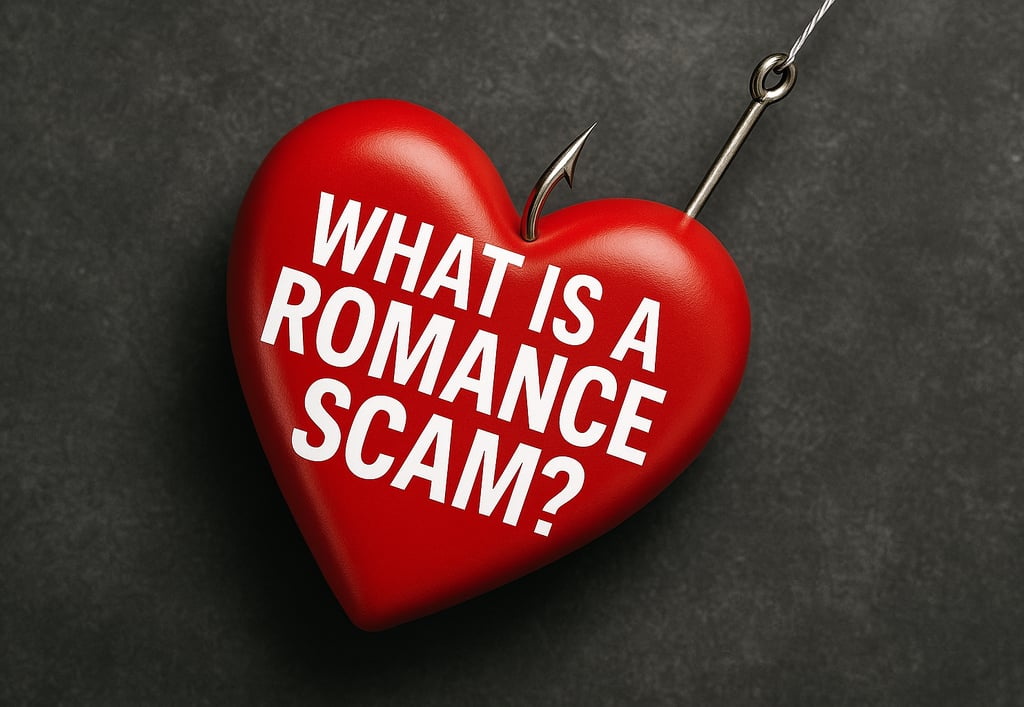
What Is a Romance Scam?
Falling for a romance scam doesn't mean you're naive—it means you're human. Learn what romance scams really are, how they work, and why compassion matters..
11/3/20259 min read
The message seemed so genuine. A friendly hello on social media, a shared interest in photography, thoughtful questions about your day. Over weeks and months, the conversations deepened. You found yourself smiling at your phone, feeling understood in ways you hadn't in years. Then came the request: an emergency, a business opportunity, a visa problem. Just temporary help. You'd be paid back. After all, isn't that what people do for someone they care about?
If this sounds familiar, you're not alone. And more importantly, you're not foolish.
A romance scam is a type of fraud where criminals create fake identities to build romantic relationships with victims, ultimately manipulating them into sending money or personal information. These scams represent one of the most emotionally and financially devastating forms of fraud today, causing losses exceeding $1.3 billion in the United States alone in 2022, according to the Federal Trade Commission.
But those numbers don't capture the real cost: the betrayal, the shame, the reluctance to trust again.
The Anatomy of Emotional Manipulation
What makes romance scams particularly insidious is that they exploit our most fundamental human need: connection. These aren't simple financial transactions gone wrong. They're carefully orchestrated psychological operations that can span months or even years.
I've spent considerable time researching these scams and speaking with survivors, and one thing has become crystal clear: romance scammers are professionals at human emotion. They don't just ask for money. They build entire worlds with you in them.
The scam typically unfolds in predictable stages, though each feels unique to the victim experiencing it:
The Idealization Phase begins when the scammer makes first contact, usually through dating apps, social media platforms, or even online games. Their profiles are carefully crafted: attractive but not unbelievably so, successful but relatable, often claiming to work abroad or in professions that explain future communication limitations (military personnel, engineers on oil rigs, doctors with international organizations).
Within days, the attention becomes intoxicating. They text good morning and good night. They remember details you mentioned in passing. They share "vulnerable" stories about past heartbreak or loss, creating a false sense of mutual intimacy. Many survivors describe feeling like they'd found their soulmate, someone who truly understood them after years of feeling invisible or undervalued.
The Investment Phase is where the emotional foundation is cemented. The scammer creates future plans together: visits that are always just around the corner, discussions of moving in together, even talk of marriage. They might call you by pet names, send poems or love letters, and craft elaborate stories about their lives that include you in every future scenario.
This phase can last weeks or months. The scammer is patient, knowing that deeper emotional investment yields greater financial returns. They're also assessing your vulnerability, testing boundaries, and learning which emotional buttons to push.
The Crisis Phase marks the turn toward financial exploitation. Suddenly, there's an emergency. Medical bills for a sick child or parent. A business deal that fell through. Legal troubles. A plane ticket to finally come visit you, but their credit card was frozen. The scenarios are endless, but they share common elements: urgency, a temporary need, and the promise that this will be the only time they ask.
The first request is often relatively small, a test of your willingness to help. Once you send money, you've crossed a psychological threshold. It becomes harder to admit you might be wrong about this person. Scammers understand the principle of escalating commitment: the more you invest (emotionally and financially), the harder it is to walk away.
The Psychology Behind the Fall
One of the most damaging myths about romance scam victims is that they're naive or desperate. This couldn't be further from the truth. Victims come from all educational backgrounds, income levels, ages, and relationship histories. I've seen reports of surgeons, attorneys, teachers, business owners, and retirees all falling victim to these schemes.
What makes someone vulnerable isn't stupidity—it's humanity.
Scammers often target people during transitional life periods: after a divorce, following the death of a spouse, during retirement, or when someone has recently relocated and feels isolated. These are times when we naturally seek connection and may have our emotional guard down.
The manipulation tactics are sophisticated. Scammers use what psychologists call "love bombing"—overwhelming someone with affection and attention to create intense emotional dependency quickly. They employ intermittent reinforcement, the same principle that makes gambling addictive, by varying their response patterns to keep you engaged and anxious for their attention.
They also create what's known as "cognitive dissonance." When red flags appear (and they always do), victims face conflicting information: the loving person they've come to know versus warning signs that something isn't right. Our brains are wired to resolve this discomfort, and often we do so by rationalizing away the red flags rather than abandoning the relationship we've invested in.
The Real-World Impact
The financial devastation of romance scams can be staggering. Unlike other frauds where victims might lose hundreds or a few thousand dollars, romance scam victims often lose their entire savings. Some take out loans, max out credit cards, or even embezzle money from employers in an attempt to help someone they believe they love.
Average losses per victim exceed $15,000, but many lose far more. Some lose hundreds of thousands of dollars over months or years of sending money. Retirement funds evaporate. College funds for children disappear. Life savings vanish.
The emotional and psychological toll is often worse than the financial loss. Victims describe symptoms consistent with PTSD: intrusive thoughts, difficulty trusting, social withdrawal, depression, and anxiety. The shame can be overwhelming. Many never report the crime because they fear judgment from law enforcement, friends, or family members who might say "I told you so" or question how they could have been so foolish.
This shame is particularly cruel because it silences victims and prevents others from learning about these scams. When survivors stay silent, scammers continue operating, and the cycle perpetuates.
Relationships with family and friends often suffer as well. Many victims keep the online relationship secret or defend it against loved ones' concerns, creating rifts that can last long after the scam ends. Some victims alienate everyone in their lives who questioned the relationship, leaving them isolated and more vulnerable.
Warning Signs Hidden in Plain Sight
While learning to spot a romance scammer's red flags is crucial for protecting yourself, it's important to understand why these signs are easy to miss when you're emotionally invested.
Romance scammers rarely display obvious warning signs initially. They're not the broken-English, obviously fake profiles of phishing emails. Modern scammers are articulate, patient, and psychologically sophisticated. They've studied what works.
However, certain patterns consistently emerge. The relationship progresses unusually fast, with declarations of love within days or weeks. There's always a reason they can't meet in person or video chat (broken camera, poor internet, security restrictions). They're often in professions or situations that conveniently explain communication barriers: deployed military, working on an oil rig, volunteering abroad.
Financial requests, when they come, are framed as temporary emergencies, never as direct asks for money. "I'm so embarrassed to even mention this..." or "I would never normally ask, but..." They might decline at first when you offer to help, making you insist, which psychologically makes you feel more in control of the decision.
Perhaps most tellingly, something about the relationship feels slightly off in ways that are hard to articulate. Your gut might whisper concerns that your heart immediately silences. This internal conflict is important to recognize and honor.
Who's Behind These Schemes?
Understanding who perpetrates romance scams can help demystify them. These aren't isolated individuals acting alone. Many romance scams are run by organized crime groups, particularly in West Africa, Southeast Asia, and Eastern Europe, though scammers operate globally.
These operations can involve dozens of people working together. One person might manage the initial contact and early conversations. Another, more skilled at manipulation and writing, might take over for the deeper emotional work. Teams share scripts, photos (often stolen from real people's social media accounts), and strategies that have proven successful.
Some scammers operate from what are essentially fraud factories—rooms full of people at computers, each managing multiple fake identities and relationships simultaneously. The "person" you're talking to might be a shifting team of individuals, which explains why voice and video calls are so carefully avoided.
This industrialization of emotional manipulation is chilling, but understanding it helps victims recognize that they weren't selected because of any personal failing. They were targeted because they were available on a platform, matched certain demographic criteria, and responded to initial contact.
The Aftermath and Road to Recovery
If you've experienced a romance scam, the first thing to know is this: it wasn't your fault. Full stop.
You were targeted by professionals who study human psychology and exploit our best qualities—our capacity for love, trust, and generosity. Being victimized doesn't make you weak or stupid. It makes you human.
Recovery is possible, though the timeline varies for each person. Many survivors find that treating the experience like grieving a death is helpful, because in many ways, you are mourning—the loss of a relationship you believed was real, the loss of the future you'd imagined, and sometimes the loss of trust in your own judgment.
Practical steps matter too. Report the scam to the FBI's Internet Crime Complaint Center (IC3), the FTC, and the platform where you met the scammer. While the chances of recovering money are slim (funds are usually quickly moved overseas and dispersed), reporting creates data that helps law enforcement track these operations and potentially prevent future victims.
Consider working with a therapist who understands fraud trauma. Standard relationship counseling approaches may not address the specific shame and trust issues that come from discovering someone you loved never existed. Support groups for scam survivors can be incredibly valuable, providing a judgment-free space to process the experience with others who truly understand.
Be patient with yourself. Some days will be harder than others. You might find yourself cycling through anger at the scammer, anger at yourself, grief over the lost relationship, and shame about what happened. All of these feelings are valid and part of healing.
Moving Forward with Wisdom, Not Walls
The goal after experiencing a romance scam isn't to never trust again—it's to trust more wisely. Building walls around your heart might feel protective, but it ultimately imprisons you, not the people who hurt you.
Instead, consider this experience as painful education in recognizing manipulation tactics and honoring your instincts. You now know what red flags look like in practice, not just theory. You understand how cognitive dissonance feels. You've learned that love shouldn't require financial sacrifice, especially early in a relationship from someone you've never met.
Real love includes consistency, follows through on promises, and shows up in person. Real love allows you to talk to friends and family about the relationship without drama or secrecy. Real love doesn't create emergencies that only your money can solve.
For those who haven't experienced a romance scam, approaching this topic with compassion is crucial. The person who tells you they're sending money to someone they met online needs gentle guidance, not ridicule. They need information about common scam tactics, not judgment about their intelligence or desperation.
If someone you care about might be involved with a romance scammer, avoid ultimatums or aggressive confrontation, which often pushes victims deeper into the scammer's influence. Instead, ask thoughtful questions: "Have you ever video chatted with them?" "Have any of your friends met them?" "What would you tell a friend in this exact situation?" Help them access their own wisdom rather than imposing yours.
The Bigger Picture
Romance scams thrive in our modern landscape of digital connection and increasing social isolation. As more people meet online, and as that becomes not just acceptable but normal, scammers have more opportunities and less stigma to overcome.
The COVID-19 pandemic accelerated this trend dramatically. With in-person socializing limited and loneliness widespread, romance scam reports and losses skyrocketed. That pattern hasn't reversed as the pandemic waned—it established new normals in how we connect that scammers continue to exploit.
Fighting romance scams requires systemic change: better verification systems on dating and social platforms, improved financial institution protocols for flagging suspicious transfers, more robust law enforcement cooperation across international borders, and most importantly, continued education and awareness.
But it also requires cultural change. We need to talk more openly about these scams, destigmatize victimization, and recognize that our capacity for love and trust are strengths, not weaknesses to be ashamed of.
A Final Word
If you're reading this because you suspect you might be in a romance scam, or because you've recently discovered that someone you cared about wasn't real, please hear this: what you're feeling is real, even if they weren't. The love, hope, and vulnerability you brought to that relationship were genuine. You were true, even if they were false.
That authenticity is something to honor, not shame. In a world that often encourages cynicism and emotional guardedness, you chose openness. You chose to believe in connection. Those choices don't make you a victim—the scammer's calculated exploitation does.
Your story matters. Your healing matters. And your future capacity for real, honest connection remains intact, even if it doesn't feel that way right now.
Romance scams work because love is powerful. They hurt because betrayal cuts deep. But understanding what they are, how they work, and why they succeed doesn't just protect us—it helps us reclaim the narrative. You're not a cautionary tale. You're a person who deserved better, who deserves healing, and who will find their way forward, one day at a time.
If you believe you've been targeted by a romance scammer, report it to the FBI's Internet Crime Complaint Center at ic3.gov, the Federal Trade Commission at reportfraud.ftc.gov, and the platform where you encountered the scammer. Consider reaching out to AARP's Fraud Watch Network or contacting the National Center for Victims of Crime for support resources.

Prefer to watch? Check out the video below. Prefer to read? Keep scrolling!
© 2025. ScamProofLove. All rights reserved — Protect your heart, your wallet, and your peace of mind.
support@scamprooflove.com