
AI Romance Scams
AI romance scams use deepfakes, chatbots, and synthetic personas to manipulate victims. Learn to recognize warning signs and protect yourself from these sophisticated frauds costing billions annually.
11/10/20257 min read
How Artificial Intelligence Is Making Love Fraud Dangerously Convincing
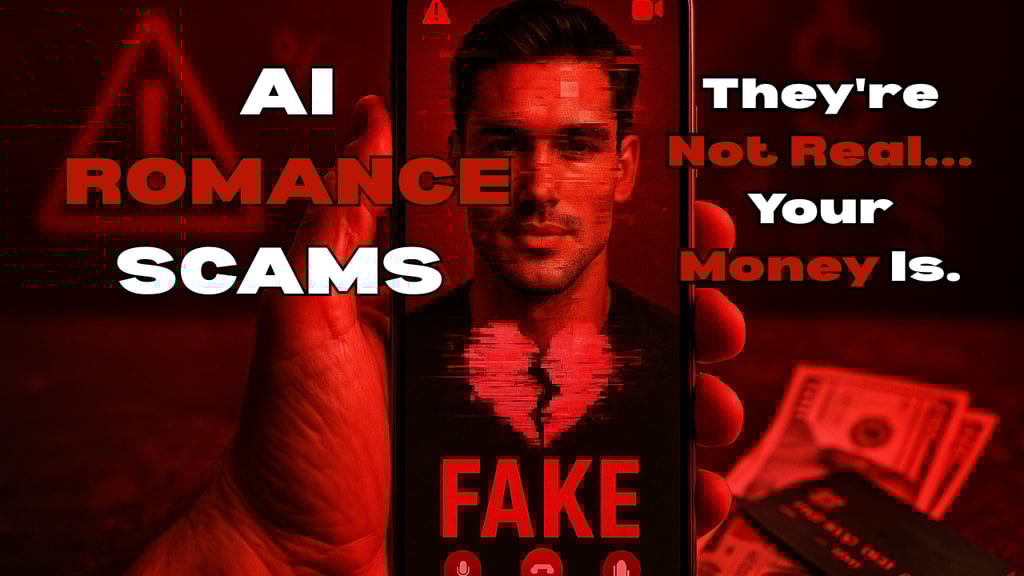
The world of online dating has been transformed by artificial intelligence—but not in the way most people hoped. While AI promises to help singles find their perfect match, scammers are weaponizing the same technology to create devastatingly convincing romance frauds. AI romance scams represent a new frontier in online deception, combining deepfake technology, chatbots, and synthetic personas to manipulate victims into sending money to people who may not even exist.
What Are AI Romance Scams?
AI romance scams occur when criminals use artificial intelligence tools to enhance traditional romance fraud tactics. Unlike older scams that relied on stolen photos and poorly written messages, today's AI-powered operations create highly realistic fake identities that can fool even tech-savvy individuals.
These scams typically begin on dating apps or social media platforms, where scammers deploy AI-generated profiles complete with synthetic photos, fabricated life stories, and sophisticated chatbot conversations. The technology has become so advanced that victims often believe they're developing genuine relationships with real people—when they're actually interacting with AI-powered fraud operations.
The financial impact is staggering. Romance scams cost Americans over $1.3 billion in 2024 alone, with AI-enhanced versions becoming increasingly common. Research indicates that approximately 8 million deepfakes will circulate globally in 2025, with roughly one-fifth targeting romance scam victims.
How Scammers Use AI Technology
Deepfake Photos and Videos
Scammers now create entirely synthetic personas using AI image generators. These fake profiles bypass traditional detection methods like reverse image searches because the photos don't exist anywhere else online. The images look incredibly realistic, showing attractive individuals in various settings and poses.
Even more concerning is the emergence of deepfake video technology in romance scams. Criminals can conduct video calls where their appearance and voice are completely fabricated in real-time. A recent case in Hong Kong resulted in victims losing over $46 million to a romance scam ring that used deepfake technology to create convincing video interactions with supposed love interests.
AI Chatbots and Automated Conversations
Advanced language models allow scammers to automate conversations with multiple victims simultaneously. These AI chatbots generate grammatically perfect, emotionally engaging messages that adapt to each victim's responses. The technology enables scammers to maintain dozens of fake relationships without the time investment traditional romance scams required.
Research from The Alan Turing Institute found that AI is being integrated into romance fraud through psychological profiling, allowing fraudsters to identify vulnerabilities and target them more efficiently. The chatbots can engage victims in long-term conversations spanning months, building emotional connections that feel genuine.
Voice Cloning
Voice cloning technology has become frighteningly accessible. Scammers need only a few seconds of audio to replicate someone's voice convincingly. In romance scams, this allows criminals to make phone calls or send voice messages that sound authentic, further reinforcing the illusion of a real relationship.
The Psychology Behind AI-Enhanced Scams
What makes AI romance scams particularly dangerous is how they exploit human psychology more effectively than ever before. Traditional red flags—like grammatical errors or inconsistent stories—have largely disappeared from AI-generated messages.
The sophistication of these scams creates what experts call "narrative attacks." Scammers develop elaborate, consistent backstories for their fake personas. They express deep affection quickly, discuss future plans together, and create a false sense of intimacy that encourages victims to overlook warning signs.
McAfee research revealed that more than one in four people have been approached by an AI chatbot posing as a real person on dating platforms. Perhaps most concerning, one in three people admitted they could potentially fall for such a scam, highlighting how convincing these frauds have become.
Warning Signs of AI Romance Scams
Despite technological advances, AI romance scams still exhibit certain patterns you can learn to recognize:
Rapid Relationship Development AI scammers typically push for quick emotional intimacy, professing love within days or weeks without truly knowing you. This accelerated timeline helps them move to the financial exploitation phase faster.
Avoiding In-Person Meetings While they may engage in video calls using deepfake technology, AI romance scammers consistently avoid actual face-to-face meetings. They'll provide elaborate excuses about being overseas, working on oil rigs, or having travel complications.
Messages That Feel "Too Perfect" AI-generated conversations may lack the natural spontaneity of human interaction. While grammatically flawless, they might feel overly romantic, use generic phrases, or provide responses that don't quite match the conversational context.
Unusual Behavior During Video Calls Less sophisticated deepfake tools struggle with body movement. Watch for people who keep their heads unnaturally still, avoid turning to show profile views, or whose audio doesn't quite sync with their mouth movements.
Financial Requests The ultimate red flag remains unchanged: any request for money, gift cards, cryptocurrency, or financial information from someone you've only met online signals a scam. Common pretexts include medical emergencies, travel expenses to visit you, visa complications, or "investment opportunities."
Profile Inconsistencies Check for social media accounts that are very new, have minimal activity, or show communication patterns from different time zones than claimed. Many AI scam operations run from overseas despite claiming to be local.
Real-World Impact: Victims' Stories
The human cost of AI romance scams extends far beyond financial loss. Beth Hyland from Michigan took out loans totaling $26,000 after being deceived by a scammer using deepfake videos on Skype. She believed she was helping her French boyfriend "Richard" overcome various obstacles, only to discover the entire relationship was fabricated.
A French woman lost $850,000 over 18 months to criminals who used AI-generated images and communications to impersonate actor Brad Pitt. These aren't isolated incidents—a woman from San Diego lost her entire life savings to scammers impersonating Keanu Reeves using similar AI tactics.
The emotional trauma can be as devastating as the financial impact. Victims describe the experience as "like grieving a death," struggling with the realization that someone they loved never existed.
How AI-Powered Scam Operations Work
Recent law enforcement operations have revealed the scale of AI romance scam rings. In Hong Kong, police arrested 27 individuals operating a highly organized fraud center. The operation included:
Specialized departments handling different scam stages
Training manuals teaching members to exploit victims' emotions
AI-generated personas engaging multiple victims simultaneously
Fake cryptocurrency platforms where victims were coerced to invest
IT specialists creating deepfake technology for video interactions
This industrial approach to romance fraud represents a significant evolution from individual scammers working alone. These organized operations can scale their attacks massively, targeting victims across multiple countries simultaneously.
Protecting Yourself from AI Romance Scams
Verify Identity Through Multiple Channels Request video calls where the person performs specific actions—like holding up certain fingers, turning their head fully sideways, or saying unexpected phrases. Simple deepfakes struggle with these spontaneous requests.
Conduct Reverse Image Searches While AI-generated images won't appear in reverse searches, many scammers still use stolen photos from real people. Running profile pictures through Google Image Search or TinEye can reveal if they're being used elsewhere.
Trust Your Network Share information about new online relationships with trusted friends or family members. They can provide objective perspectives and spot inconsistencies you might miss due to emotional involvement.
Take Your Time Real relationships develop gradually. Be immediately suspicious of anyone pushing for rapid intimacy, quick financial involvement, or rushing you toward decisions.
Never Send Money to Online-Only Contacts Regardless of how convincing the story, never transfer money, purchase gift cards, or share financial information with someone you've only met online. Legitimate romantic interests won't ask for financial help before meeting in person.
Use Security Tools Consider employing AI detection tools and comprehensive online protection software that can identify suspicious messages, phishing attempts, and AI-generated content in real-time.
The Future of AI Romance Scams
Experts predict that AI romance scams will become even more sophisticated as technology continues advancing. Future threats may include:
Real-time deepfake video calls that are indistinguishable from authentic interactions
AI systems that can analyze your social media and tailor scam approaches to your specific interests and vulnerabilities
More sophisticated psychological manipulation based on AI analysis of your communication patterns
Integration with emerging technologies like virtual reality dating platforms
However, the same AI technology enabling these scams is also being developed for detection. Machine learning systems can analyze messaging patterns, identify synthetic media, and flag potential scams before victims lose money.
What to Do If You're a Victim
If you believe you've encountered an AI romance scam:
Stop All Communication Immediately - Block the scammer on all platforms and don't respond to further contact attempts.
Don't Send Additional Money - Scammers often claim they can return previous funds if you send more money. This is always false.
Report to Authorities - File reports with the FBI's Internet Crime Complaint Center (IC3), the Federal Trade Commission, and your local police department.
Alert Your Financial Institutions - Contact your bank immediately if you've shared financial information or sent money.
Document Everything - Save all messages, photos, videos, and transaction records as evidence.
Seek Support - Consider speaking with a counselor about the emotional impact, as romance scam victims often experience significant psychological trauma.
Staying Safe in the Age of AI
AI romance scams represent a troubling evolution in online fraud, but awareness remains your best defense. The technology makes these scams more convincing than ever, but the fundamental patterns remain recognizable to informed users.
Remember that genuine romantic interests don't ask for money before meeting in person, regardless of how compelling their stories might be. They don't avoid video calls indefinitely, and they don't push for rapid emotional and financial involvement.
As artificial intelligence continues reshaping our digital landscape, maintaining healthy skepticism in online relationships isn't cynicism—it's self-protection. By understanding how AI romance scams operate and recognizing their warning signs, you can navigate online dating safely while protecting both your heart and your wallet from increasingly sophisticated fraudsters.
The best relationship you can build is one based on verified identity, in-person interaction, and time-tested trust—something no AI can fake, no matter how advanced the technology becomes.
Beyond the Technology: Understanding Romance Scams
AI may be the newest weapon in scammers' arsenals, but romance fraud has been devastating lives for decades. The technology changes, but the manipulation tactics remain surprisingly consistent.
Want to understand the psychology, patterns, and traditional methods that still account for the majority of romance scams?
Start Here: What Is a Romance Scam? The Complete Guide →
Whether it's AI-powered or old-school catfishing, knowledge is your best defense.
© 2025. ScamProofLove. All rights reserved — Protect your heart, your wallet, and your peace of mind.
support@scamprooflove.com